The Best Time to See Birds of Paradise in Indonesia: A Papua Field Guide
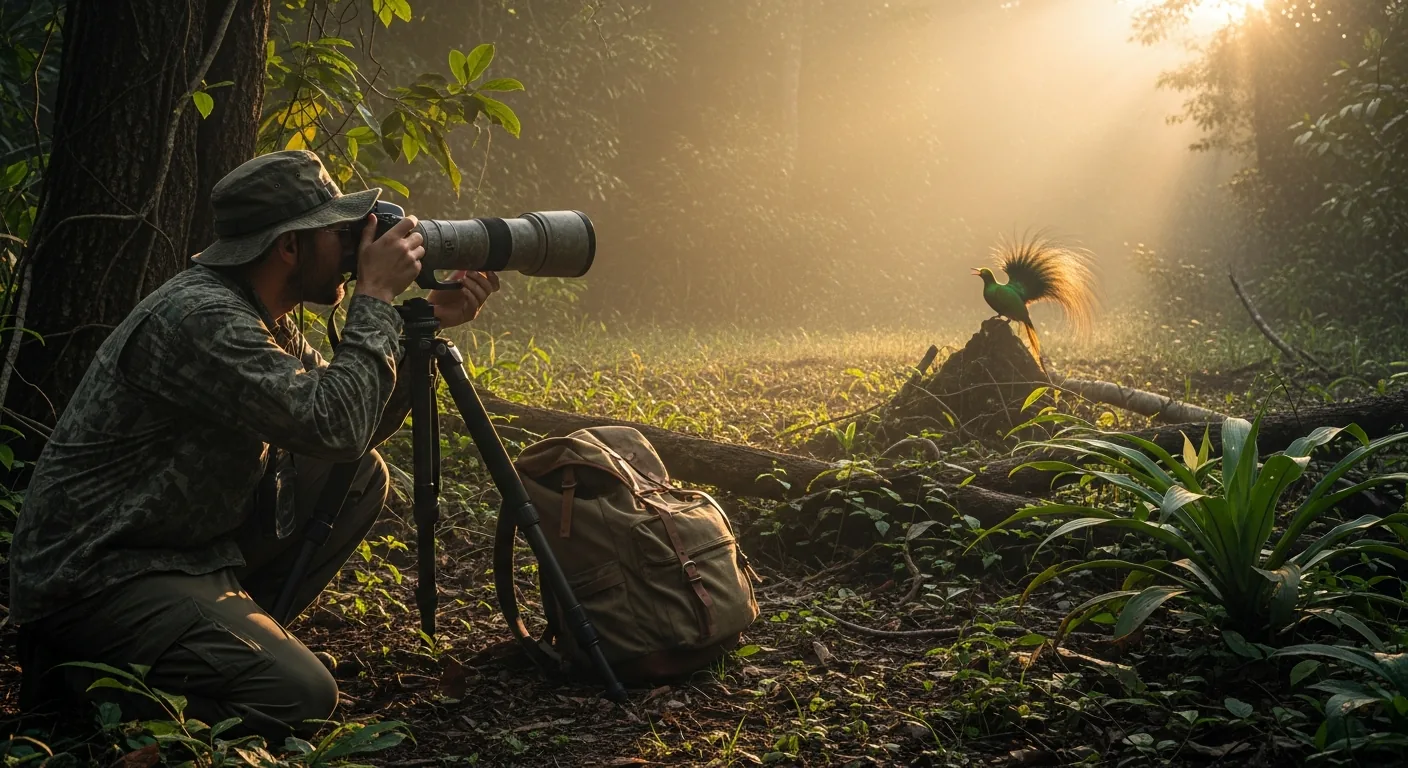
The air is thin and cool, carrying the scent of wet humus and crushed ginger leaf. It’s 4:45 AM in the Arfak Mountains, a solid 1,800 meters above the Celebes Sea, and the world is a composition of charcoal and indigo. A faint chorus of insects is the only sound, a constant, high-frequency hum that seems to hold the silence in place. Then, from a clearing just beyond your hide, a single, sharp call cuts through the pre-dawn stillness. It is the first note in a symphony that has played out here for millennia. The performance is about to begin, and you are holding your breath, waiting for the light. See also: Wilsons Bop Aru Islands pricing.
The Paradox of Papua’s Climate: Why Timing is Everything
For those intent on observing the Paradisaeidae family, the birds of paradise, timing is not just a detail; it is the fundamental variable that dictates the success or failure of an expedition. The island of New Guinea, politically divided between Indonesia’s West Papua and the nation of Papua New Guinea, is home to 39 of the world’s 42 known species. Planning a trip to this remote and ecologically complex region presents a significant logistical challenge, chief among them being the climate. West Papua operates on a broadly tropical monsoon cycle, defined by two dominant seasons: wet and dry. Arriving during the wrong one can mean more than just discomfort. It can mean impassable trails, relentless downpours that silence the forest, and, most critically, birds of paradise that have no incentive to perform their elaborate courtship displays.
The primary objective for any serious observer, ornithologist, or photographer is to witness these displays. The dry season provides the optimal stage. Less rainfall translates directly to more accessible trails, reduced humidity for clearer optics, and a lower chance of leeches. More importantly, the drier, more stable weather from approximately July through October coincides with the peak of breeding activity for many key cendrawasih species. A trip planned for February, deep in the wet season, might yield sightings, but the probability of witnessing a Western Parotia clear his dance court or a Red Bird-of-Paradise hang inverted from a branch in full display is drastically diminished. The stakes are simply too high to leave to chance.
The Prime Window: Decoding the Dry Season (July to October)
While Papua’s weather can be notoriously unpredictable, a consensus among field guides and researchers points to a core window of opportunity. The period from early July to late October consistently offers the most favorable conditions for a dedicated birds of paradise Indonesia expedition. Meteorologically, these months are characterized by the influence of a southeasterly wind pattern, which brings drier air from the Australian continent, resulting in significantly less precipitation across much of the Bird’s Head Peninsula and surrounding islands.
This climatic stability is the cue for which the birds have been waiting. With food sources abundant after the wet season and the forest floor less saturated, males are driven to their communal display grounds, or leks. This is when the forests of West Papua become theaters of evolution. The Magnificent Bird-of-Paradise (Diphyllodes magnificus) meticulously clears his court, the King of Saxony Bird-of-Paradise (Pteridophora alberti) raises his baffling head-wires, and the Lesser Bird-of-Paradise (Paradisaea minor) gathers in a treetop chorus line. The consistency of these displays during the dry season is what allows for productive, multi-day observation from strategically placed hides.
“The forest floor in August is a stage. The birds know their cues, the light is their collaborator, and the dry earth allows the sound of their movements to travel. We simply position our clients to witness the third act.” See also: Birds of Paradise Indonesia Expeditions.
A Regional Calendar: Arfak Mountains vs. Raja Ampat and the Aru Islands
West Papua is not a monolith. Its topography ranges from the 4,884-meter Puncak Jaya to the sea-level archipelagos of Raja Ampat. This diversity creates distinct microclimates, and the “best time” can shift depending on your specific geographic and species targets. A successful expedition requires a nuanced, region-specific approach. See also: explore Contact.
| Region | Primary Targets | Peak Viewing Season | Logistical Notes |
|---|---|---|---|
| Arfak Mountains | Western Parotia, Vogelkop Superb BoP, Arfak Astrapia, Black Sicklebill | July – October | Access via Manokwari. Highland climate; cool mornings and nights. Lodges near Siyoubri are basecamps. |
| Raja Ampat (Waigeo/Batanta) | Wilson’s BoP, Red BoP | October – April | Access via Sorong. Sea conditions are calmer. Combines well with marine activities. |
| Aru Islands | Greater BoP, King BoP, Twelve-wired BoP | May – August | Historically significant (Wallace, 1857). More influenced by Australian climate. Logistically complex. |
Arfak Mountains Birding
The montane forests of the Arfak range are arguably the most accessible and reliable location for observing several endemic species. For an Arfak Mountains birding trip, the July to October window is ironclad. The trails leading from villages like Siyoubri and Mokwam to the established leks are at their most navigable. At elevations between 1,500 and 2,500 meters, you can expect cool, crisp mornings, with mist that often burns off by 8:00 AM, revealing birds actively displaying to catch the first rays of sun. This is the premier location for the Vogelkop Superb Bird-of-Paradise (Lophorina niedda), only identified as a distinct species in 2018.
Raja Ampat Bird Tour
The islands of Raja Ampat, particularly Waigeo and Batanta, present a different climatic pattern. While still benefiting from the general dry season, the best period for a Raja Ampat bird tour extends from October through April. This is when the seas are calmest, making inter-island boat travel more reliable. The primary targets here are two of the most visually arresting species: the Red Bird-of-Paradise and the almost mythical Wilson’s Bird-of-Paradise (Cicinnurus respublica). The latter’s display, performed on a meticulously cleared patch of forest floor, is one of ornithology’s greatest spectacles and requires dry ground to be performed correctly.
The Aru Islands: In Wallace’s Footsteps
The low-lying Aru Islands, far to the southeast, are a special case. It was here in 1857 that Alfred Russel Wallace first observed the Greater Bird-of-Paradise (Paradisaea apoda) and secured specimens for science. Aru’s climate is more heavily influenced by nearby Australia, with a pronounced dry season from roughly May to August. Expeditions here are logistically demanding but offer the chance to see the spectacular mass displays of the Greater BoP, a behavior that inspired much of Wallace’s subsequent work on sexual selection. While many searches for the Wilson’s bird of paradise Aru are made, it is important to note this species is not found here; its territory is hundreds of kilometers northwest in Raja Ampat.
The Photographer’s Perspective: Light, Rain, and Behavior
For wildlife photographers, the dry season offers a confluence of critical advantages. The primary goal is to capture clean, well-lit images of natural behavior, and the July-October period maximizes the probability of achieving this. See also: Birds of Paradise Indonesia Expeditions.
- Quality of Light: Courtship displays are most intense in the early morning, typically from 5:30 AM to 8:00 AM. The dry season provides more cloud-free sunrises, yielding the warm, low-angle light that illuminates the birds’ iridescent plumage. A cloudy, overcast morning—common in the wet season—results in flat, high-ISO images that fail to capture the subjects’ vibrancy.
- Equipment Safety: While rain covers are always essential in New Guinea, the reduced frequency and intensity of downpours during the dry season lowers the risk to sensitive camera bodies like a Sony A1 or Canon R3 and expensive telephoto lenses such as a 600mm f/4. Less moisture in the air also means less chance of lens fogging during the cool mornings.
- Behavioral Predictability: This is the most crucial factor. A male bird of paradise will not display on a rain-slicked court or branch. Heavy overnight rain can delay or cancel the morning’s activities entirely. During the dry season, lek attendance is far more reliable, allowing our guides at Birds of Paradise Indonesia Expeditions to schedule hide sessions with a high degree of confidence.
Beyond the Peak: The Merits of the Shoulder Seasons
What if your schedule does not permit travel between July and October? The shoulder months—May, June, and November—can still provide a rewarding experience, albeit with some caveats. During this time, you may encounter fewer travelers and find more flexibility in lodging. Much of the display behavior can still be observed, particularly at the beginning and end of the season. However, visitors must be prepared for a higher chance of precipitation. A multi-day rainstorm in late November is not uncommon and can impact the itinerary. For generalist birders, whose targets are not limited to displaying cendrawasih bird papua, these months can be excellent, as many resident species are active year-round. The core wet season, from December to April (outside of Raja Ampat), is generally not recommended for a first-time visitor focused on BoP observation due to the severe logistical challenges posed by weather.
Planning Your Cendrawasih Expedition with Precision
Timing your Papuan expedition correctly requires careful planning and expert consultation. The difference of a few weeks can have a significant impact on your observations. We recommend a structured approach to ensure your investment of time and resources yields the best possible results.
- Define Your Primary Targets: Are you focused on the montane endemics of the Arfaks, or is the Wilson’s Bird-of-Paradise your principal goal? Your species list will determine your destination, which in turn determines the optimal time of year.
- Allow for Sufficient Time: Travel in West Papua is slow. Weather and local conditions can cause delays. We recommend a minimum of 10-14 days on the ground to provide a buffer and maximize your opportunities at various hides and elevations.
- Book Well in Advance: The prime July-October season is in high demand. The best local guides and lodges, such as those in the Arfak Mountains, have limited capacity and are often booked 9 to 12 months in advance.
- Consult with Specialists: Local, on-the-ground knowledge is invaluable. A specialist operator can provide up-to-date information on trail conditions, recent bird activity, and the subtle climatic variations that public forecasts miss.
The pursuit of the cendrawasih bird Papua is one of the last great adventures in ornithology. Success hinges on meticulous planning, and the most important decision you will make is when to go. By aligning your travel with the dry season’s peak display window, you are not just hoping to see these birds; you are scheduling an appointment with one of nature’s most extraordinary performances.
To begin designing a journey timed to the rhythms of the forest, contact the specialists at Birds of Paradise Indonesia Expeditions. Our team can provide detailed, region-specific advice to align your visit with peak avian activity.
Contact Birds of Paradise Indonesia Expeditions:
Phone: +62 811 3941 4563
Email: [email protected]
Office: Jalan Sunset Road No. 88, Kuta, Badung, Bali 80361
By Alistair Finch, Senior Travel Editor, for Birds of Paradise Indonesia Expeditions.