A Complete Guide to the Birds of Paradise in Indonesia
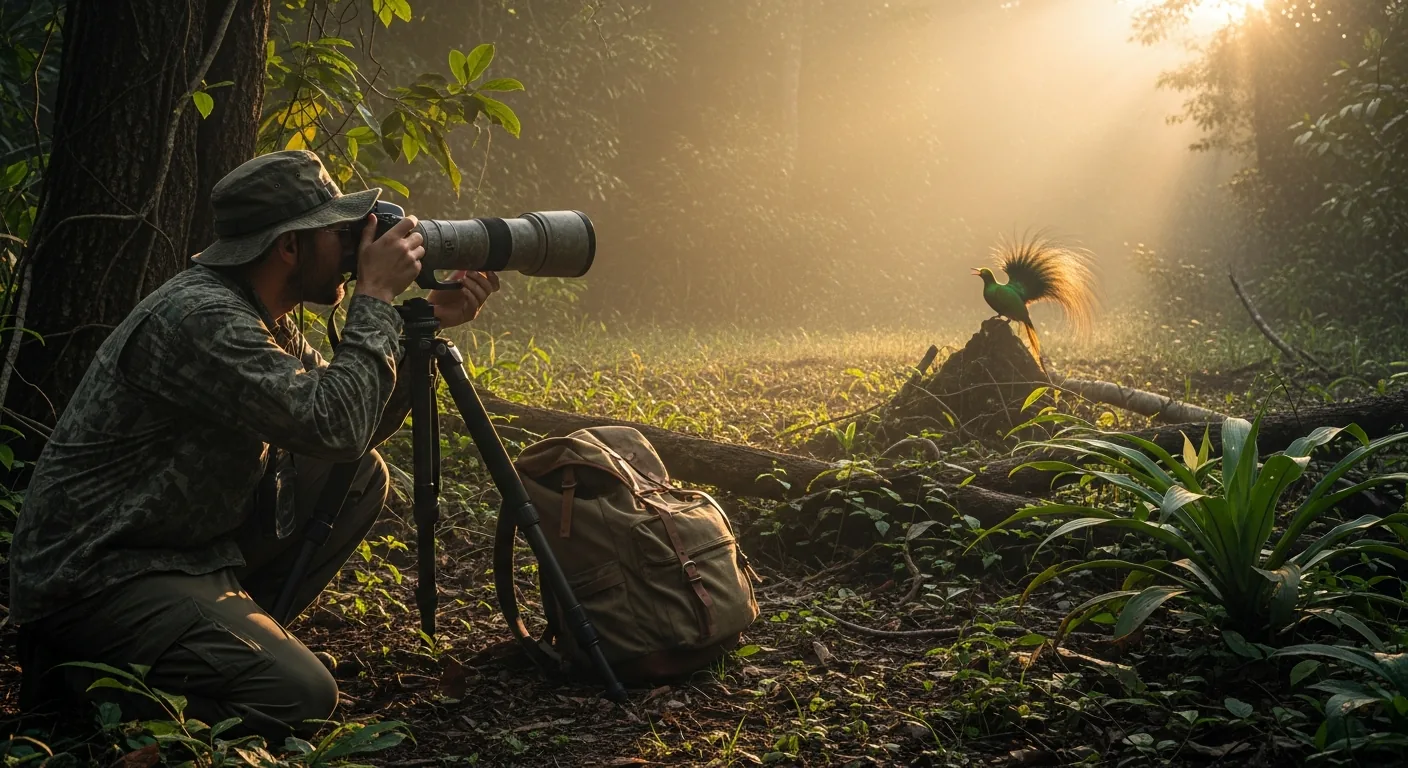
The air in the Arfak Mountains, an hour before sunrise, is cool and thick with the scent of wet earth and epiphytic orchids. A low mist clings to the canopy of the montane forest, muffling all but the most insistent insect calls. You sit in a hide constructed of leaves and branches, motionless, camera ready. Then, a sound cuts through the quiet—a series of sharp, mechanical-sounding clicks. On a cleared patch of forest floor, a small, dark bird begins to move. It’s a Western Parotia, and the dawn has brought with it the promise of one of nature’s most intricate performances. This is the precise moment that draws naturalists and photographers halfway across the world to West Papua. See also: Home pricing.
The Challenge of Locating New Guinea’s Avian Jewels
The family Paradisaeidae, containing over 40 species of birds of paradise, represents an evolutionary masterpiece. The majority of these species are endemic to the island of New Guinea and its surrounding archipelagos—some of the most rugged and inaccessible terrains on Earth. For ornithologists and dedicated eco-tourists, the desire to witness these birds is profound, but the logistical hurdles are significant. The primary challenge is not simply knowing the species exist, but knowing precisely where and when to find them. See also: Contact.
Many of the most sought-after species, like the Wilson’s Bird-of-Paradise or the Black Sicklebill, inhabit specific, often small, altitudinal bands within remote mountain ranges. Their display grounds, or leks, are traditional sites used for generations, known only to local communities. Without this deep, place-based knowledge, a trek into the Papuan rainforest can easily result in little more than fleeting glimpses and frustration. The vibrant world of the cendrawasih bird papua remains hidden to the unprepared traveler. This is not a landscape that yields its secrets easily; it requires expertise, patience, and a network of trusted local guides who understand the rhythms of the forest and the habits of its most elusive residents.
Core Habitats: The Three Epicenters of Bird-of-Paradise Observation
While birds of paradise are distributed across New Guinea, three regions in Indonesia’s West Papua province offer the most reliable and diverse viewing opportunities. Each presents a distinct ecosystem and is home to a unique assemblage of species. Planning a successful expedition requires understanding the specific offerings of each location. See also: book Raja Ampat Bird Tour.
The Arfak Mountains
Rising abruptly from the Bird’s Head Peninsula, the Arfak Mountains are a primary destination for serious birders. This isolated range, peaking at Mount Arfak (2,955 meters), has fostered the evolution of several endemic species. The experience of Arfak Mountains birding is defined by treks through cloud forests to established hides overlooking the leks of species like the Western Parotia (Parotia sefilata). Here, on a meticulously cleared patch of ground, the male performs his famous “ballerina dance.” Other key species found between 1,400 and 1,900 meters in elevation include the Magnificent Bird-of-Paradise, the Superb Bird-of-Paradise (now recognized as multiple species, including the Vogelkop Superb Bird-of-Paradise), and the long-tailed Astrapia.
The Aru Islands
Situated in the Arafura Sea, this low-lying archipelago of around 95 islands was visited by the great naturalist Alfred Russel Wallace in 1857. It was here he collected specimens of some of the most spectacular birds known to science. The Aru Islands remain a critical habitat for the King Bird-of-Paradise (Cicinnurus regius) and the awe-inspiring Greater Bird-of-Paradise (Paradisaea apoda), whose cascading yellow flank plumes were the original source of the European trade. The forests here are distinctly different from the montane environments of the mainland, offering a unique birding context.
Raja Ampat Archipelago
Known globally for its marine biodiversity, the 1,500-island Raja Ampat archipelago is also a key birding destination. The two most important islands for bird-of-paradise observation are Waigeo and Batanta. These islands are the exclusive home of the Red Bird-of-Paradise (Paradisaea rubra) and the remarkable Wilson’s Bird-of-Paradise (Cicinnurus respublica). A Raja Ampat bird tour often combines marine exploration with terrestrial treks into the island interiors to witness these two iconic species. The Wilson’s, with its bare blue head and sickle-shaped tail feathers, is often considered one of the most beautiful and bizarre birds on the planet.
“To see a Bird of Paradise in its native forest is to witness a pinnacle of sexual selection. The colors and dances are not mere decoration; they are the result of millions of years of evolutionary pressure, a living narrative of competition and choice.” See also: Birds of Paradise Indonesia Expeditions About.
A Closer Look: Key Species and Their Courtship Displays
The scientific intrigue of the birds of paradise lies in their elaborate courtship rituals. The males’ plumage and choreographed displays are among the most extreme examples of sexual selection in the animal kingdom. Understanding these behaviors is key to appreciating the spectacle. The naturalist Edwin Scholes and photographer Tim Laman have documented all 39 species in the Cornell Lab of Ornithology’s Birds-of-Paradise Project, revealing behaviors once unknown to science.
Below is a comparative guide to a few of the most sought-after species you might encounter on an expedition with Birds of Paradise Indonesia Expeditions.
| Common Name | Scientific Name | Key Habitat | Defining Features & Display Behavior |
|---|---|---|---|
| Wilson’s Bird-of-Paradise | Cicinnurus respublica | Lowland/hill rainforest on Waigeo & Batanta Islands, Raja Ampat | Male has a bare, turquoise-blue crown, scarlet back, and yellow mantle. He clears a display court on the forest floor, performing rapid, complex dances for visiting females. Endemic to these two islands. |
| Western Parotia | Parotia sefilata | Montane forest (1,400-1,800m), Arfak Mountains | A black bird with an iridescent bronze breast shield and six wire-like feathers extending from its head. The male performs a “ballerina dance” on a cleared court, flaring his flank feathers into a “skirt.” |
| Red Bird-of-Paradise | Paradisaea rubra | Lowland/hill rainforest on Waigeo & Batanta Islands, Raja Ampat | Male has yellow and brown plumage with striking crimson flank plumes and two long, wire-like tail feathers. Groups of males display in the canopy, hanging upside down and fanning their plumes. |
| King of Saxony Bird-of-Paradise | Pteridophora alberti | High-altitude montane forest (1,500-2,750m), central New Guinea ranges | Famous for its two extraordinarily long (up to 50cm) scalloped head plumes. During display, the male rhythmically bounces on a vine, waving the plumes over his head to attract a female. |
The Legacy of Wallace and the Imperative of Conservation
The scientific world’s fascination with these birds began in earnest with Alfred Russel Wallace. During his eight-year journey through the Malay Archipelago from 1854 to 1862, he collected 125,660 specimens, including the first intact specimens of several bird-of-paradise species. His book, *The Malay Archipelago* (1869), detailed his adventures and brought the astounding beauty of the cendrawasih bird papua to the Western world. Wallace’s work in places like the Aru Islands was foundational to his co-discovery of the theory of evolution by natural selection.
Today, that legacy is intertwined with conservation. The habitats of these specialized birds are under pressure from logging and subsistence agriculture. Sustainable, community-based ecotourism provides a powerful alternative, creating economic value in preserving the forests and their unique avifauna. When you undertake an Arfak Mountains birding expedition, for instance, a significant portion of the resources directly benefits the local Hatam and Sough communities who act as guides and custodians of the land. Organizations like the Arfak Mountains Nature Reserve, established in 1992, work to protect over 680 square kilometers of this critical habitat. Choosing a responsible operator ensures your presence contributes directly to the protection of these species for future generations.
Planning Your West Papua Expedition: A Logistical Primer
A successful bird-of-paradise expedition requires meticulous planning. The remote nature of the destinations means that fitness, gear, and timing are critical factors. This is not a casual undertaking; it is a focused endeavor for those serious about wildlife observation and photography.
- Physical Condition: Be prepared for trekking in humid conditions on uneven, often muddy, forest trails. Hikes to hides can range from 30 minutes to several hours, sometimes beginning before dawn. A good level of cardiovascular fitness is essential.
- Optimal Timing: The primary birding season generally aligns with the drier months, from roughly May to October. This period offers more comfortable trekking conditions and often coincides with peak display activity for many species.
- Essential Gear: High-quality binoculars (e.g., 8×42 or 10×42) are non-negotiable. For photographers, a telephoto lens (400mm or greater) is recommended, along with a tripod or monopod for stability in low-light forest conditions. Fast lenses (f/2.8 or f/4) are highly advantageous. Pack lightweight, quick-drying clothing in neutral, earthy tones, and broken-in waterproof hiking boots.
- Local Expertise: Partnering with a specialized operator is the single most important decision. Birds of Paradise Indonesia Expeditions utilizes a network of local Papuan guides who possess generations of knowledge about lek locations and bird behavior. This local connection is the key to successfully and ethically observing species like the highly sought-after Wilson’s bird of paradise aru counterpart on Waigeo.
Consult with an Expedition Specialist
The sheer diversity of the Paradisaeidae family and the logistical complexities of reaching their habitats demand expert guidance. A well-planned journey to West Papua is one of the most rewarding ventures in the world of natural history travel. It is a chance to step into the world documented by Wallace and Attenborough, to witness evolution’s artistry firsthand.
To discuss the specifics of a tailored expedition, from a focused Raja Ampat bird tour to a comprehensive overland journey through the Arfak Mountains, contact our specialists. We can provide detailed itineraries, species checklists for each region, and advice on preparing for your trip.
Connect with Birds of Paradise Indonesia Expeditions to begin planning:
- Phone: +62 811 3941 4563
- Email: [email protected]
- Office: Jalan Sunset Road No. 88, Kuta, Badung, Bali 80361, Indonesia
Let us help you navigate the complexities of the region so you can focus on the birds themselves.
By Alistair Finch, Senior Travel Editor. Alistair has covered natural history and expedition travel for over 15 years, with a focus on the Australasian ecozone. He has made three trips to West Papua since 2011.
Related reading
- Predicting the 2027 Impact of Climate Change on Lesser Birds-of-Paradise Breeding Cycles
- Unveiling the Mechanics of Your Bali Luxury Transfer: A 2027 Overview
- How Much Does a Luxury Bird of Paradise Tour Indonesia Cost?
- Editorial Standards — How Birds of Paradise Indonesia Expeditions Researches & Verifies